
What Oneida County Property Values Mean
A Oneida County property value can mean an assessed amount, a DOR equalized or full-value comparison, or the price recorded in a transfer. Each figure answers a different question. Assessments drive local tax administration. Equalized values let you compare assessment levels across municipalities. A deed consideration or sale price captures one transaction at a single point in time. None of these numbers is a current appraisal of what the parcel would sell for today.
| Value Type | Meaning | Where Recorded |
|---|---|---|
| Assessed value | Local value placed on the assessment roll for tax work | Ascent parcel/tax record |
| Equalized or full value | DOR comparison measure for local assessment levels | Wisconsin DOR municipality reports |
| Last sale price | Price or consideration reported for a past transfer | Recorded deed or related transfer instrument |
| Market appraisal | Professional opinion for a defined purpose and date | Appraisal report, not the tax roll |
Looking Up an Oneida County Property Value
Start with a parcel search in Ascent. Pull up the parcel card. Read the value for the tax year shown, and keep any land, improvement, and total figures separate. One system feeds several documents. The county's 2024 Land Information Plan notes that Ascent supports assessment workbooks, assessment notices, tax statements, and tax rolls. Compare the live parcel card and tax bill rather than assuming a fixed field layout.
- Find the correct parcel by address or local parcel number.
- Confirm the tax year and municipality before noting the total.
- Record land, improvement, and total values separately if displayed.
- Compare the parcel's value with the prior tax year and the most recent transfer date.
- Use DOR municipality reports only for assessment context, not as a parcel-specific sale estimate.
The parcel key comes first. A Oneida County property search finds it fast, and value interpretation can begin only after the correct parcel and tax year are in view.
What an Oneida Assessed Value Is Not
An assessed value is a tax figure. It is not a buyer's offer, an appraisal, or proof that a sale price is fair. A parcel's latest deed may predate its current assessment. And a price from a different parcel may reflect other land, improvements, access, or shoreland context, so treat comparisons with care.
Assessment is not sale value. Use the assessment to understand the local tax roll. For a sale, financing, estate, or legal decision that needs market value, obtain the appropriate professional appraisal or valuation.
Tax questions go elsewhere. For bill fields, payments, or objections, use the Oneida County property tax records page.
Oneida County Assessment Ratios
The Wisconsin DOR publishes assessment ratios and equalized values for every municipality, and its major-class report defines the ratio plainly: assessed value compared with the DOR base or full value for that class. State law adds a rule. Municipalities must assess major classes within 10 percent of full value in the same year at least once within a five-year period. These are compliance and comparison measures. They say nothing about what one Oneida parcel should sell for. The DOR assessment ratio tool provides the report route.
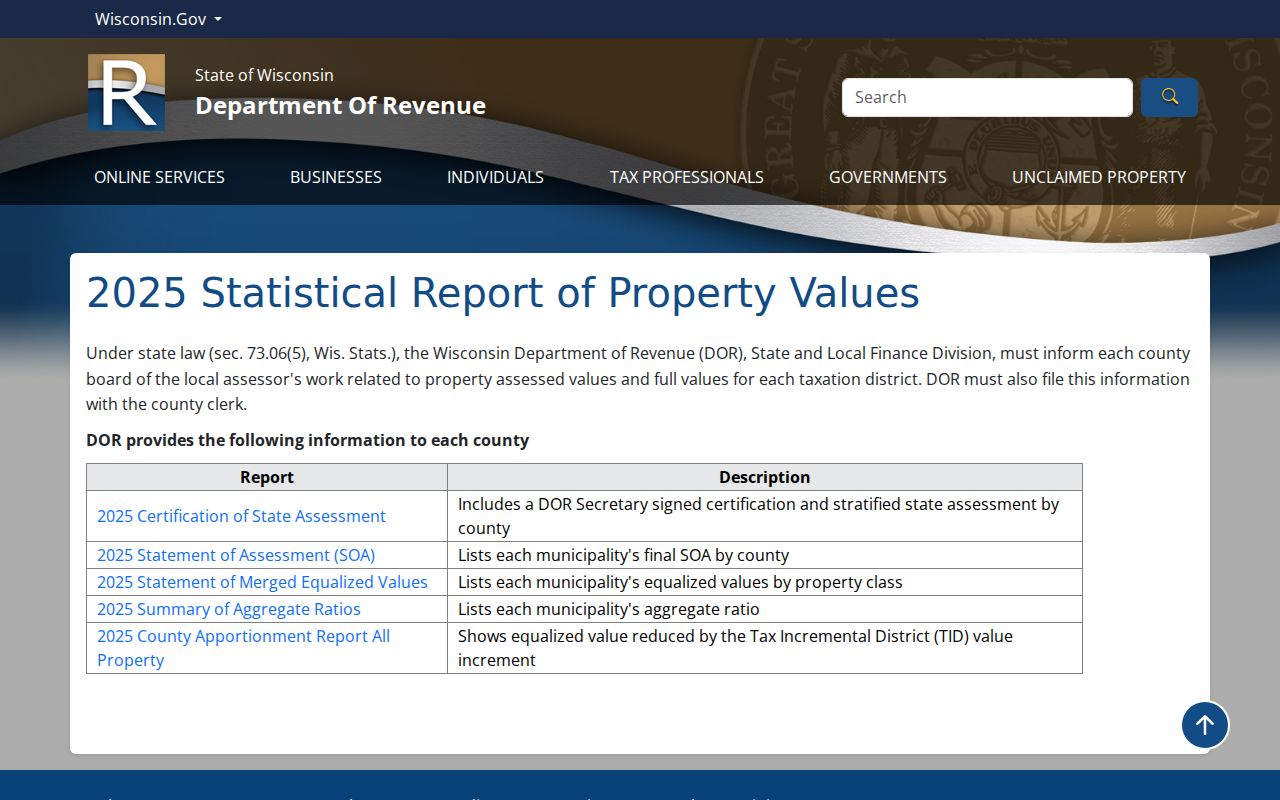
Use the ratio for context, not as a price.
Oneida County Land and Improvement Values
Parcel cards that split land from improvements tell you more. Land value attaches to the ground itself. Improvement value reflects structures and other components in the roll. A change in the total can come from either part, from a new assessment, a record correction, or a change in what the parcel includes. Check the tax year before comparing anything. The Oneida County Treasurer can provide assessed and fair-market value in some cases. Ask which year and which measure is on the table. "Fair market" in a tax context is not a fresh appraisal. It is certainly not a guaranteed offer price.
Oneida County Equalized Value Context
DOR uses equalized value as a statewide yardstick. An individual assessment can sit above or below it. The reports work at the municipality and property-class level, not the parcel level. The ratio shows whether a local roll sits near the state base. It is a ratio, not a price predictor. Comparisons need discipline. Keep the tax year and property class consistent. A lakefront lot, a wooded tract, and an in-town home do not become comparable just because they share a municipality. Use the legal description and parcel details to see what is actually being measured.
Recorded Sale Price in Oneida Deeds
A deed records a conveyance. When consideration appears, it gives one transaction datum. That price belongs to its transfer date and terms. It is not the current assessed amount or today's market value, and a family transfer, estate conveyance, or partial interest may not resemble an ordinary sale at all. RecordEASE deed images go back to January 5, 1887. The searchable index starts December 19, 1979. For older price or ownership research, the pre-1997 tract index may help locate the instrument. Read the deed in context, since a price field alone cannot explain land condition, easements, or what interests changed.
Oneida County Reassessment Timing
Oneida County has no fixed countywide reassessment cycle to rely on. Revaluations happen locally. Each municipality sets its own schedule. Check the year printed on the parcel card. Also check the assessment notice before using any value. That tells you which tax year a number reflects. Ask the assessor or your municipality for the current schedule. Ratio reports from the Department of Revenue offer broad context. Annual Ascent figures track a parcel's tax-roll history where available. Neither predicts a future sale price. Keep assessment, tax, and recorded sale price clearly labeled by source.
Oneida County Property Value Questions
Any value lookup needs a source and a date. In Oneida County, start with Ascent for the current roll. The Department of Revenue supplies municipality ratios and equalized value. A deed record holds a past sale price. The Treasurer can sometimes share assessed or fair-market details by phone. Payment history and a volume and page reference may also be available there. Always ask which tax year a figure covers and what that value means. Comparing numbers built on different definitions invites errors. Locate the parcel first with the Oneida County property search steps. For a sale or legal decision, treat a tax figure as one input. The professional records that matter deserve the final word.
Oneida County Value History by Tax Year
A comparison needs a source and a tax year beside every number. Ascent handles annual assessment and tax-roll work. The Treasurer can sometimes supply value and payment details. DOR ratios describe assessment context at the municipality level. These systems update on different schedules. A newer figure in one is not a live correction to another. When you review a parcel history, keep the land value, improvement value, total assessment, tax year, last transfer date, and source name in separate fields. A recorded sale price belongs to its transfer date. An assessed total belongs to a tax roll. If a notice is unclear, ask the assessor or the municipality how that year was set. For a bill, credit, or review deadline, consult the Oneida County property tax records information.
Make a Comparable Oneida Value Note
To compare Oneida County values year to year, record the parcel number, tax year, land component, improvement component, total assessed value, and the source shown for each figure. Never match a current assessment against an older sale amount. They measure different things. A sale reflects its date and terms. An assessment is a roll value for one year. Note any new building, addition, or land split. The property itself may have changed. Municipality-level equalized value and assessment ratio data from the Department of Revenue explain broader valuation context, but one parcel's assessment does not follow from those figures. For a question about a single value, start with the local assessor or the municipality named on the tax record. Keep the tax bill and the assessment notice for their separate purposes, and confirm the applicable review procedure and dates with the assessor. Careful labels now save confusion later.