
Finding Who Owns an Oneida Parcel
Start at the parcel record. That is the dependable way to learn who owns a property in Oneida County, and the name on it should be checked against a deed before you rely on it. Ascent Land Records supports lookup by address, owner name, or parcel number, and it links property, tax, permit, and deed information in one place. The owner field is a roll entry. A title opinion it is not. Write down the parcel number and legal description before heading to the Register of Deeds, since owners' names repeat and a mailing address may not match the property's location. Those two identifiers keep the deed search on the right parcel.
- Search the known address in Ascent and select the matching municipality and parcel.
- Write down the current owner label, mailing address, parcel number, and full legal description.
- Open RecordEASE or the Grantor/Grantee index and confirm the latest recorded deed for that same description.
- If an LLC or corporation appears, check its legal entity name in Wisconsin DFI Corporate Records Search.
- Ask the Register of Deeds or Land Information staff when a field is missing, unclear, or newer in one system than another.
- Owner of record
- The party shown in an assessor or tax roll at the time that record was updated.
- Grantee
- The named party receiving an interest in a recorded transfer.
- Situs address
- The physical location attached to the parcel.
- Legal title
- The complete rights and claims shown through title review, not a single roll field.
Oneida County Ownership Sources
Each source answers a different ownership question. Ascent gives the parcel and the current roll name. RecordEASE shows the recorded instrument and the party roles behind it. GIS confirms the property's mapped location and municipality, which helps when an address is ambiguous. The Treasurer can sometimes identify an owner, tax value, payment history, delinquency, or a deed volume and page by phone. Match the source to the fact.
| Source | What It Adds | How to Read It |
|---|---|---|
| Ascent Land Records | Current parcel card, owner and address fields | Current roll label, may lag a new deed |
| Register of Deeds | Deed, mortgage, release, plat or CSM image | Recorded instrument with parties and land description |
| GIS Mapping | Parcel polygon, mapped jurisdiction, layers | Spatial context, not a survey or title record |
| Treasurer | Tax balance, payment, value and some owner details | Call with parcel or document reference |
The current owner record covers roll names and update lag. Deed copies and instrument types sit in the county's deed records section.
Limits of an Oneida Owner Lookup
A single name search rarely settles ownership in Oneida County. Trusts, LLCs, estates, and co-owners all complicate the picture. Name spellings and initials vary. An assessor card can still list the prior owner for a time after closing. A mailing address may belong to a fiduciary or tax-mailing agent instead of the grantee. Before relying on a name, compare the legal description against the most recent recorded instrument.
A roll name is a lead. It does not establish clear title, beneficial ownership, or the identity of a person using the property. Use county records for lawful property research and do not use owner details to threaten, stalk, or harass anyone.
When an entity holds the parcel, Wisconsin DFI can verify its registered office, agent, filing history, and current status. The search does not reveal domestic LLC members or a federal tax number. The Wisconsin DFI entity search is the state's official record.
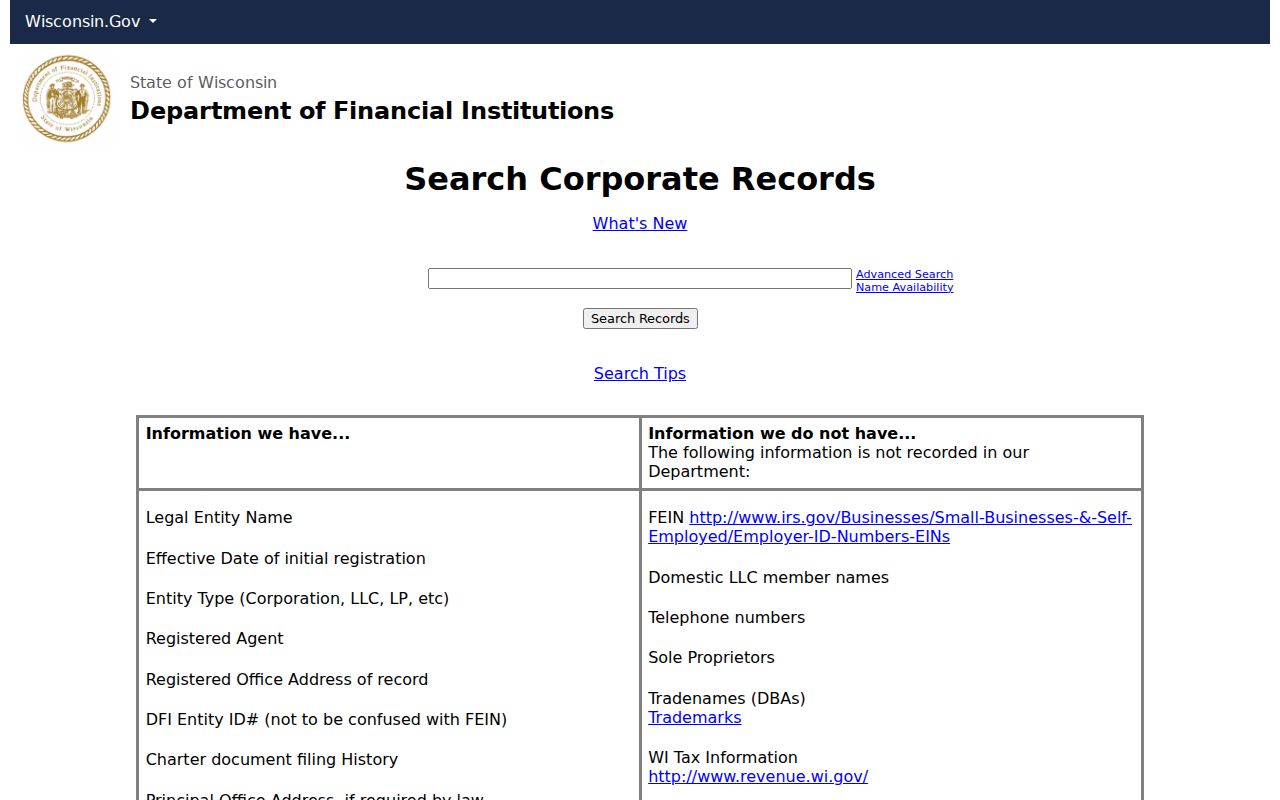
Confirm the company's legal identity through the entity result. Then return to the land record for the parcel itself.
Oneida County's Current Owner and Deed Lag
A sale that just closed can appear in the deed index. The assessor roll still lists the seller. RecordEASE records an instrument at filing. Tax and assessment data follow the county's real-property listing process instead. No fixed number of days separates recording from the roll update. Check the deed date before calling any roll entry current after a recent transfer.
The Treasurer offers a second route. Staff can sometimes provide an owner, a value, or an amount paid. They may also share a tax payment history, delinquency, or a volume and page reference. Have the parcel number or deed details ready, and ask which system holds the item. A phone answer only points to a record. The recorded image remains the source for what was actually filed.
When an LLC or Estate Owns Land
An entity name on a Oneida County parcel card is not a person. DFI's corporate record shows the legal entity, its status, agent, registered office, ID, charter history, and annual-report year. It never lists a domestic LLC's members. A registered agent accepts legal notices. That duty does not make the agent the owner.
Estate transfers add another wrinkle. The conveyance may appear under a personal representative or a formal estate name, so search the Register of Deeds first and then check the Oneida Clerk of Circuit Court or CCAP for probate details where public. Vital records follow Wis. Stat. §69.21 on certified-copy eligibility. A death certificate is not a title shortcut. Confirm the transfer through the recorded deed or a court order.
Matching an Owner Name to a Parcel
A name alone proves little. Compare the town or city, parcel number, legal description, and transfer reference before accepting any match. Oneida County's ZIP 54501 covers both Rhinelander and Monico. A postal town does not settle a city boundary. Lake and rural addresses often borrow a familiar community name while the parcel sits in a town, and GIS with the municipal field sorts those cases out.
Trusts call for deed language. Compare trustee wording, not just names. Corporations need exact punctuation and the legal suffixes exactly as the recorded deed spells them. Multiple parcels in one result set each need a legal-description check.
Oneida County Records Beyond the Web Roll
Oneida County offers several ways past a dead-end party index. If Ascent turns up no owner history, ask Land Information for help. That office can share parcel data and mailing fields. RecordEASE works well for a recorded transfer. The searchable deed index starts December 19, 1979. Images go further back, to January 5, 1887. For older material, the pre-1997 tract index takes a land-first route. Its scans date to 1888.
A missing record still has a path. Send a specific Wisconsin Public Records Law request to the office that holds it. Name the address or parcel in your request. Include the legal description, the approximate date, and the record you want. Wisconsin law presumes access but allows exceptions and lawful costs. The authority generally need not create a new summary or answer a broad ownership question.
Oneida County Ownership and Address Privacy
Most owner, parcel, and mailing fields are public in Oneida County. An address can still be protected. Wisconsin's Safe at Home program gives participants formal address-confidentiality protections. A public result can therefore look incomplete for good reason. Ask the custodian how such a record is handled. Do not try to reconstruct a protected residence from unrelated data.
Wisconsin MyVote checks personal voter registration only, not an unrestricted county owner database. The name search requires first name, last name, and birth date. The address mode wants street, unit, city, and ZIP. Do not infer ownership from those results. Keep the property question with the parcel and deed records instead.
Confirming Who Owns Oneida County Land
The assessor roll gives a quick owner label. For routine questions that may be enough. A purchase, an estate, a boundary dispute, or a legal decision calls for more. Match the roll's label to a recent deed and the exact legal description. For older transfers, work backward through the grantor and grantee names. You can also use the manual tract index. A search can point to the right records. But it cannot replace a complete title review.
A business owner needs another check. Verify the legal entity record. Compare that exact name with the deed. If a parcel changed shape, compare the CSM or plat. When a tax card and deed differ, ask the custodian about timing before assuming a mistake. That turns a name into a traceable property record for Oneida County land.
Build a Verifiable Owner-of-Record Trail
Start with the current parcel record. It should give the owner name and parcel number. Compare that name carefully against the latest recorded conveyance before relying on it. The two sources answer related but different questions, since the roll is a practical current lookup while the deed documents a transaction and its legal description.
An entity owner needs its own search. If a limited liability company or corporation holds title, search the Wisconsin Department of Financial Institutions entity database for public filing details. Compare the exact legal name with the deed. An entity filing may identify an agent or registered office, but it does not establish that person's ownership of the underlying real estate.
Trusts and estates need care too. Follow the recorded instrument and ask the custodian how its index represents the parties. Keep the parcel and document references with your notes. Resolve any mismatch with the Land Information or Register of Deeds office that maintains the record.