
Oneida County Property Tax Records at a Glance
Oneida County property tax records pull together the parcel, the assessed value, the tax bill, and the payment history. Yet no single office handles all of it. Ascent serves as the county's entry point for tax and parcel data. The Treasurer keeps collection records, payments, delinquencies, and foreclosure information. Your municipality, meanwhile, collects the first installment or the full current-year payment due January 31. Read the tax year carefully. Check the named collector too. Only then should you trust an amount or send money anywhere.
| Field or Record | What It Can Show | Where to Check |
|---|---|---|
| Parcel and owner label | Tax parcel, roll owner, mailing and situs addresses | Ascent Land Records |
| Assessment | Assessed value and land/improvement components where shown | Ascent; Land Information |
| Tax amount | Current-year charge and district context | Ascent; Treasurer or municipality |
| Payment record | Installment and payment history | Treasurer; Point and Pay where available |
| Delinquency | Unpaid balance or tax-foreclosure status | Treasurer; county foreclosure route |
| Historic tax material | Older bills or office records by year | Treasurer, then historical custody inquiry |
An assessment is a value set for local tax work. It is neither a sale price nor an appraisal. A tax bill simply shows the amount due under a given year and district.
How to Find an Oneida County Tax Bill
Begin with a parcel number or an address. Compare the year, owner of record, and municipality on the result before going further. Ascent is Oneida County's documented system for tax, parcel, and permit records. It also holds deed records. Its interactive labels and required fields vary, so check them in the live system. When an online card skips payment detail, the Treasurer can answer questions by phone. Have a parcel or record reference ready.
- Search the property in Ascent and note its local parcel number and legal description.
- Confirm that the tax year and tax district match the bill you are reading.
- Check the Treasurer's current payment instructions to see which office collects that installment.
- Use the Treasurer or Point and Pay route for eligible county payments, and verify fees and status first.
- For an older bill, ask the Treasurer whether the record remains in the office or was offered to historical custody.
Oneida County Ascent Tax Search Fields
Ascent offers broad search modes that can lead to a tax record. County documentation does not publish a field-by-field form, though. The table below keeps that limit visible so no one relies on a guessed label. Any field may appear as a tab. It may also show as a result filter or part of a parcel card.
| Search Item | Type | Required Status | Practical Use |
|---|---|---|---|
| Property address | Search mode | Not captured | Find the parcel from situs address. |
| Owner name | Search mode | Not captured | Locate parcels tied to a roll name. |
| Parcel/local number | Search mode | Not captured | Open a known tax parcel directly. |
| Tax year | Result selector | Not captured | Compare the charge and value for a selected year. |
| Tax district | Result context | Not captured | Match a bill to the right taxing unit. |
The county's 2024 Land Information Plan notes that Ascent supports assessment workbooks, assessment notices, tax statements, and tax rolls. The visible fields can differ by screen and year.
Assessment and Fair-Market Values in Oneida
The assessor roll and the Treasurer's tax information may both show assessed and fair-market value. Those terms describe tax administration. They are not a promise about what a parcel would sell for today. The Wisconsin Department of Revenue publishes equalized value and assessment ratios. These compare local assessed amounts with a statewide base or full value. DOR's major-class reports explain the ratio by class of property. Treat the municipality-level report as context, never as a parcel appraisal. Keep land, improvement, and total figures separate when they appear. A change in one may reflect a new assessment, property work, or a record correction. To read value fields correctly, compare the parcel tax card across tax years. Study the value section, not the payment total alone.
Oneida County Tax Collection Calendar
Collection routes shift during the year. The Treasurer states that a first installment or full current-year payment due January 31 goes to the municipality. It does not go to Oneida County. County online payment pauses from mid-November to early February. After that seasonal gap, second installments and delinquent balances run through Point and Pay. Confirm the exact payment window for a parcel with the collector named on the bill. Point and Pay posts charges of 2.39 percent for a card. An eCheck costs $1.50 up to $10,000, or $10 above that. These are processing fees, not property taxes. A parcel in foreclosure cannot use the ordinary online route. The county requires certified funds instead. Call the Treasurer before paying any account with a foreclosure flag. Current links and timing appear on the Oneida County Treasurer page.
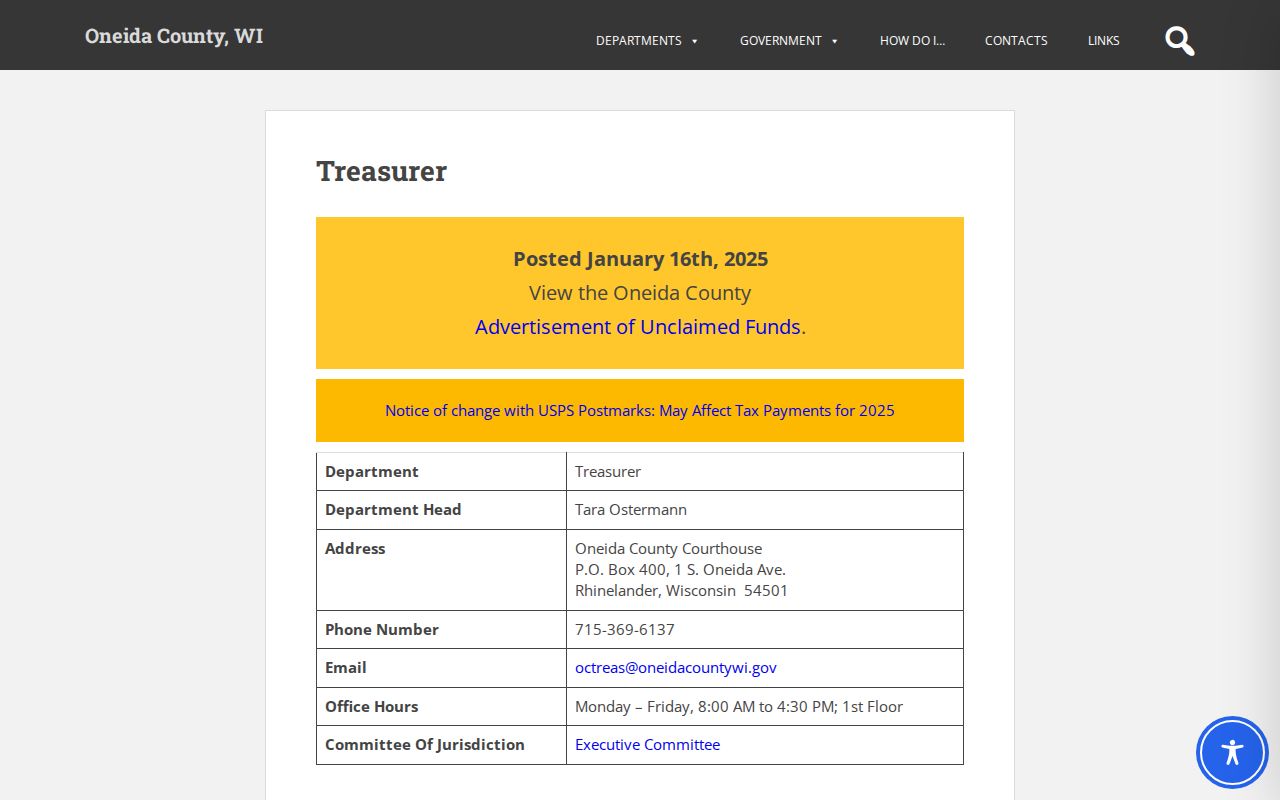
The captured page shows the county's tax-search route and seasonal payment notes.
Oneida County Delinquency and In-Rem Foreclosure
Delinquent real-estate taxes move through an in-rem foreclosure process. The Treasurer runs it, that office states. A proper delinquency check covers several items. Note the parcel, tax year, and balance. Include interest or fees, notice dates, and current foreclosure status. Tax listings change after payment. Confirm the amount and any deadline with the Treasurer before acting. Foreclosure parcels carry a special payment rule: certified funds are required. The point is practical as much as legal. A general online payment screen may refuse an account already in foreclosure. A stale search result may also miss a recent payment. Never assume an old notice reflects the current balance.
Oneida County's Fifteen-Year Tax Record Trail
Oneida County's Treasurer keeps tax records for fifteen years. After that, they may pass to the State Historical Society. That agency generally takes census-year material. A search can end in either place. Ask about the year first. Then verify where the historical custodian deposited the older files. Transfer was never guaranteed for every parcel or every year, so a missing year does not mean the record was destroyed.
The county also points to the History Center and Archives at the Northern Great Lakes Visitor Center in Ashland. An old tax record can anchor a parcel in a past year. Compare it with deeds, maps, and the legal description. The assessor roll is not a continuous title index, so it cannot prove ownership on its own.
Reviewing an Oneida County Assessment
Start with the assessment notice. Pull the parcel's land, improvement, and total entries too. Compare figures for the same parcel and tax year before arguing anything. Then ask the assessing authority how its local review calendar and evidence rules work. Oneida County's current appeal dates, forms, and hearing schedules come from that office, not from a generic Wisconsin calendar. Borrowed dates from another municipality will mislead you.
Confirm the local deadline. Contact the assessor or municipality named on the notice as soon as it arrives, and ask for the current objection window and submission method. A statewide value report cannot replace a local appeal instruction.
Wisconsin DOR ratio and equalized-value reports frame a municipality's assessments in context. Those are aggregate measures. Aggregate numbers never settle a parcel appeal. Keep the notice, parcel key, prior-year values, and comparable property evidence together. When the tax bill or the appeal is the real question, the Oneida County property-value explanation covers the difference between assessment and sale price.
Oneida County DOR Value Context
The Department of Revenue's ratio reports line up local assessed value with DOR's base or equalized full value for each property class. Wisconsin municipalities must bring major classes within 10 percent of full value at least once every five years. The comparison must fall in the same year. That explains the gap between local and statewide figures. Neither number is an appraisal of your parcel. Treat both as context. DOR's report selection tool is available from its assessment-ratio page.
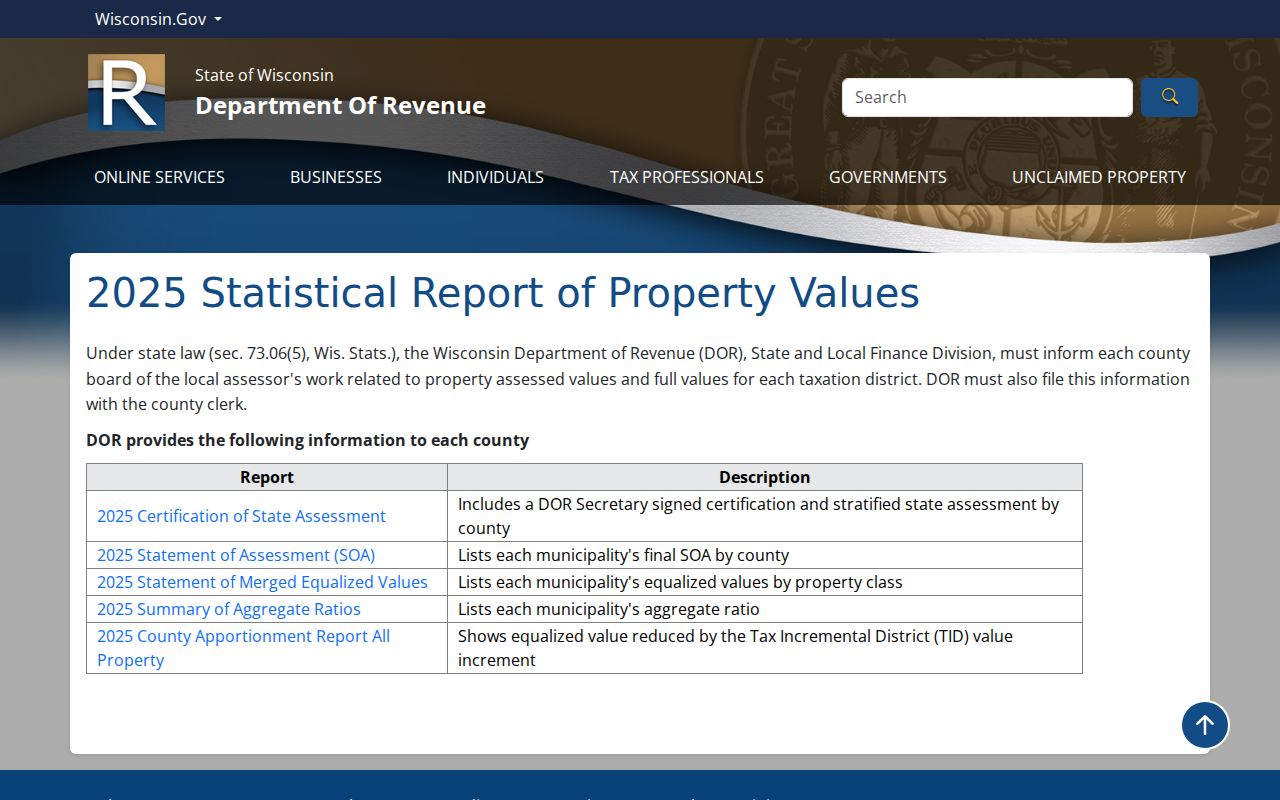
Use it for tax-roll context, not parcel answers.
Oneida County Tax Record Requests
Match the request to the record. Do this when a tax field is missing from the online card. The Treasurer can often identify a parcel owner. Size comes through in some cases. So does the payer. The office can also report assessed or fair-market value, the tax amount, payment date, delinquency, and the deed volume or page reference. Give staff the parcel number, tax year, or legal description. That helps them tell similar accounts apart. Ask whether the answer comes by phone or needs an existing-record request.
For anything outside the online view, a Wisconsin Public Records Law request should be specific. Name the record, year, parcel, and preferred format. The law sets no fixed response deadline. The office may charge lawful copying or location costs. The county's How Do I page links to tax, property map, foreclosure, and landowner mailing-address tasks. Confirm the current collector and payment balance before sending any funds.
Keep the Tax Year and Payment Status Together
Anchor every tax search in two facts. Record the parcel and the bill year. Save the billed amount, payment entries, and any balance exactly as displayed. Then confirm current status with the Treasurer before paying. A cached page or an old bill can miss a recent transaction. Assessment figures answer a different question than the amount due.
The assessor's valuation feeds the tax calculation. The Treasurer's account reports collection activity. Keep those roles separate. If a record points to a delinquency or foreclosure matter, ask the Treasurer which current file or deadline applies instead of trusting an old notice. For a disputed assessment, contact the local assessor about that year's review route and deadline.